Showing posts with label Indian Wars. Show all posts

Monday, April 27, 2026

General William T. Sherman and the Indian Wars


General William TecumsehSherman stands as one of the most polarizing figures in American military history. Celebrated for his ruthless “March to the Sea” during the Civil War, which helped break the Confederacy’s will to fight, Sherman turned his attention westward after 1865. As commanding general of the U.S. Army from 1869 to 1883, he directed the military campaigns that subdued the Plains Indian tribes and opened the American West to railroads, settlers, and mining interests. His application of total-war tactics—destroying an enemy’s resources and capacity to resist—proved as effective against Native Americans as it had against the South. By the time he retired, the once-dominant buffalo-hunting cultures of the Great Plains had been shattered, and thousands of Indigenous people were confined to reservations.

Born in 1820 in Ohio and named after the Shawnee leader Tecumseh—an ironic detail given his later career—Sherman graduated from West Point in 1840. He served in the Mexican-American War, left the army for civilian life, and rejoined at the outbreak of the Civil War. His friendship with Ulysses S. Grant propelled him to prominence. When Grant became president in 1869, Sherman succeeded him as commanding general, overseeing a vast territory between the Mississippi River and the Rocky Mountains. With fewer than 25,000 troops scattered across frontier posts, his primary mission was to protect the transcontinental railroad and wagon trails while facilitating white settlement.

Initially, Sherman supported diplomatic efforts. As a member of the Indian Peace Commission, he helped negotiate the Medicine Lodge Treaty (1867) and the Treaty of Fort Laramie (1868), which established reservations for southern Plains tribes and the Sioux. He also arranged the return of Navajo people from the Bosque Redondo reservation to their homelands in New Mexico. Yet Sherman viewed treaties as temporary measures. When the Medicine Lodge agreements collapsed in 1868 and raids continued, he authorized his subordinate, Major General Philip Sheridan, to launch a winter campaign against the Cheyenne, Arapaho, and Kiowa. The resulting Battle of the Washita River in November 1868 destroyed a Cheyenne village and set the tone for future operations. Sherman’s strategy was clear: strike when tribes were vulnerable, in winter, when food and mobility were limited.

Sherman’s private correspondence revealed a harsh worldview. After the 1866 Fetterman Massacre, in which 81 soldiers died in an ambush by Sioux warriors, he telegraphed Grant urging “vindictive earnestness against the Sioux, even to their extermination, men, women and children.” In 1867 he told Grant that the nation would not allow “a few thieving, ragged Indians” to halt railroad progress. He believed Native resistance obstructed civilization and that military force, not negotiation alone, would decide the West’s future. Yet he also criticized corrupt Indian agents and speculators who exploited reservation tribes.

The cornerstone of Sherman’s campaign was economic warfare. He recognized that the buffalo—source of food, clothing, shelter, and spiritual life for Plains Indians—was the foundation of their independence. Rather than ordering soldiers to slaughter herds directly, Sherman encouraged civilian hunters. In an 1868 letter to Sheridan, he suggested inviting “all the sportsmen of England and America” for a “Grand Buffalo hunt” to sweep the herds away. Professional hunters like William “Buffalo Bill” Cody and hide merchants responded enthusiastically. By 1873, vast stretches of the Plains were littered with rotting carcasses. Colonel Richard Irving Dodge described the scene: where “myriads of buffalo” had roamed the year before, now only “a dead, solitary, putrid desert” remained. Congress attempted to protect the herds in 1874, but Sherman helped convince President Grant to pocket-veto the bill. Within a decade, the buffalo were nearly extinct in the wild—fewer than 325 remained by the early 20th century. Without their primary food source, tribes faced starvation or surrender.

Sherman’s oversight extended to major conflicts of the 1870s. He reorganized frontier forts and supported operations during the Modoc War in California and Oregon, the Great Sioux War of 1876 (which included the Battle of the Little Bighorn), and the Nez Perce War. In 1871, after narrowly escaping the Warren Wagon Train raid by Kiowa and Comanche warriors in Texas, he insisted that captured chiefs Satanta and Big Tree be tried for murder in a civilian court—the first such trial of Native leaders in U.S. history. These campaigns, though often led by subordinates like George Custer, Ranald Mackenzie, and Nelson Miles, bore Sherman’s strategic imprint: relentless pursuit, destruction of villages and supplies, and winter attacks that exploited Native vulnerability.

By the late 1870s, the free-roaming warrior societies of the Plains had been broken. The once-mighty Sioux, Cheyenne, Comanche, and Kiowa were confined to reservations where they depended on government rations. Historian David D. Smits noted that, with their economic base destroyed, Indigenous people had “no choice but to accept a servile fate on a reservation.” Sioux leader Sitting Bull later reflected that “a cold wind blew across the prairie when the last buffalo fell—a death-wind for my people.” Sherman retired on February 8, 1884, at the mandatory age of 64, having achieved the nation’s goal of securing the West for railroads and settlement.

Sherman’s legacy in the Indian Wars remains contentious. To many 19th-century Americans, he was a pragmatic hero who tamed a “savage” frontier and enabled national expansion. To Native Americans, his policies amounted to cultural destruction. He never uttered the infamous line “The only good Indian is a dead Indian”—that phrase is usually attributed to Sheridan—but his writings and actions reflected a willingness to use extreme measures when resistance persisted. His middle name, drawn from a Shawnee chief who once united tribes against American encroachment, underscored the irony of his career.

In the end, Sherman’s western campaigns completed the work begun in Georgia: the application of total war to achieve political ends. The railroads he protected crisscrossed the Plains, towns sprang up beside them, and the buffalo were gone. The Indian Wars under his command marked the closing chapter of armed Indigenous resistance on the continent and the triumph of industrial America over the nomadic cultures that had thrived there for centuries. Sherman died in 1891, remembered primarily for the Civil War, yet his quieter, more methodical conquest of the West reshaped the nation just as profoundly.


Arizona Legends and Lore


Monday, March 16, 2026

The Ten Oddest Things About George Armstrong Custer


Here are the ten oddest things about George Armstrong Custer, whose glittering career ended in disaster at Little Bighorn

One:Baby-Talk Nickname: Family called him “Autie” his whole life after toddler George mispronounced his middle name “Armstrong.”

Two: West Point’s Worst Cadet: Graduated dead last (the infamous “goat”) in 1861 after racking up a mountain of demerits for pranks—snowball fights, stolen chickens, even wearing a wig to hide non-regulation hair.

Three: Cinnamon-Scented Locks: The vain cavalryman drenched his long golden curls in cinnamon oil so they smelled sweet during charges.

Four: Dandy Uniforms: Rode into battle wearing black velvet jackets trimmed with gold lace, bright red scarves, and wide-brimmed sombreros—looking more like a showman than a soldier.

Five: Boy General at 23: Promoted to brigadier general at age 23 after daring charges; newspapers dubbed him the youngest Union general.

Six: Surrender Table Trophy: His wife Libbie received the actual small table Grant used to draft Lee’s surrender at Appomattox. She loaned the table to the Smithsonian in 1912. Title to the table was transferred to the Smithsonian after her death.

Seven: Custer Family Massacre: Five members of his immediate family—including two brothers, a nephew, and brother-in-law—died with him atLittle Bighorn.

Eight: Court-Martialed for Love: Suspended a year in 1867 for abandoning his Kansas regiment without permission just to see his beloved Libbie.

Nine: Custer’s Luck: Eleven horses shot out from under him during the Civil War; he emerged unscathed every time—until June 25, 1876.

Ten: Last-Minute Haircut: Contrary to legend, he cropped his famous curls short right before Little Bighorn to beat the summer heat.


Custer’s Last Stand Re-examined


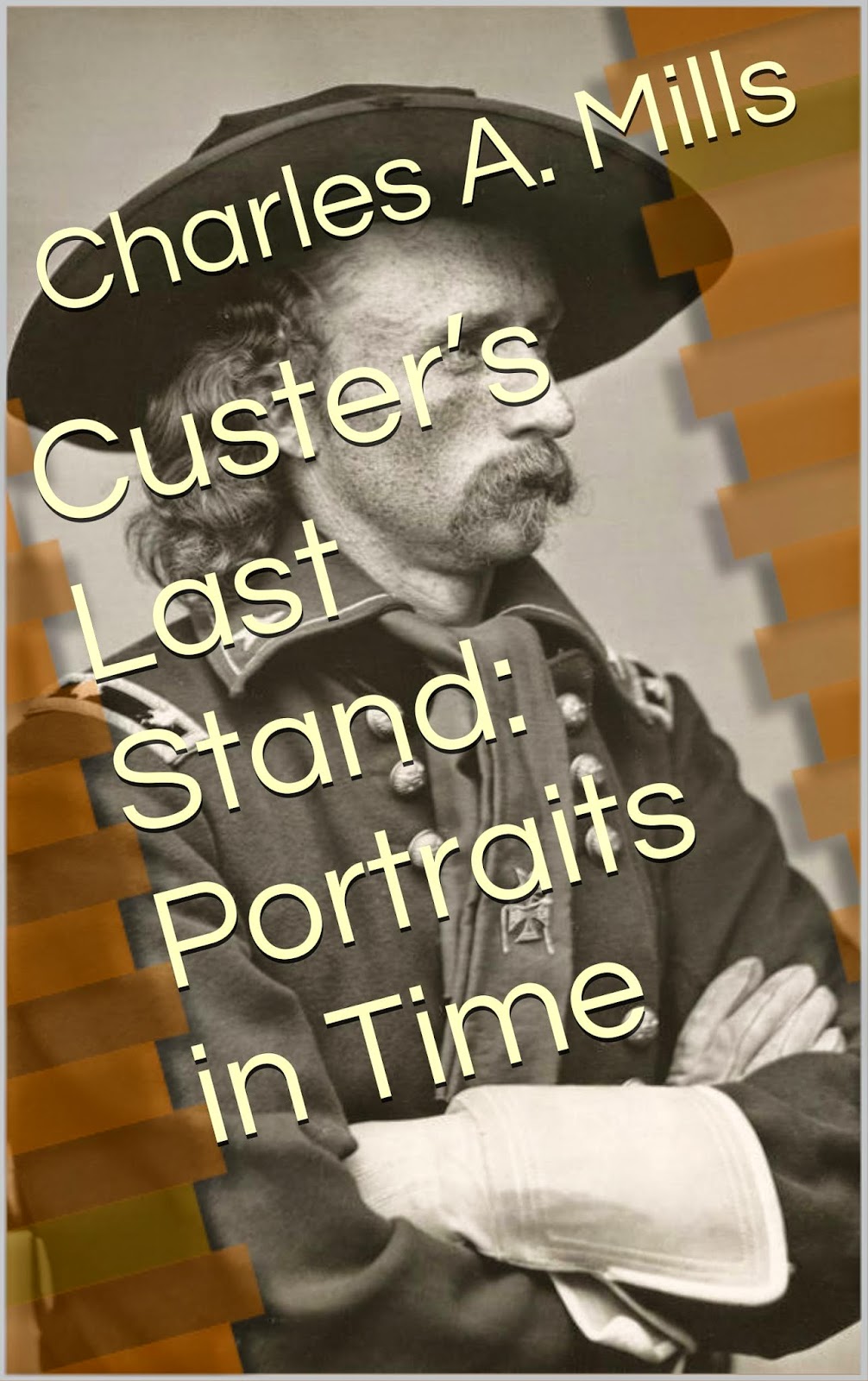
Custer’s Last Stand: Portraits in Time

Sunday, March 08, 2026

General Phil Sheridan After the Civil War


Following the American Civil War, Union General Philip Sheridan transitioned from battlefield triumphs to key roles in Reconstruction and westward expansion. In 1867, he was appointed military governor of the Fifth Military District, overseeing Texas and Louisiana. Known for his stringent enforcement, Sheridan removed Confederate sympathizers from office and suppressed Ku Klux Klan activities

Transferred to the Department of the Missouri, Sheridan directed campaigns against Plains tribes during the Indian Wars. Employing "total war" strategies from the Civil War, he authorized winter assaults, destruction of villages, and encouraged buffalo extermination to force Native Americans onto reservations. He oversaw conflicts like the Red River War (1874/1875), the Great Sioux War (1876/1877), and the Nez Perce War (1877), effectively subduing resistance but drawing criticism for brutality.

Promoted to lieutenant general in 1869, Sheridan succeeded William T. Sherman as Commanding General of the U.S. Army in 1883. He advocated for Yellowstone National Park's protection, deploying cavalry to safeguard it from exploitation. Marrying Irene Rucker in 1875, he enjoyed a quieter later life until suffering heart attacks. Congress promoted him to full general on June 1, 1888, weeks before his death on August 5 at age 57 in Nonquitt, Massachusetts. Buried at Arlington National Cemetery, Sheridan's legacy blends Civil War heroism with controversial conquests in the West.


Treasure Legends of the Civil War

Tuesday, February 17, 2026

General William T. Sherman After the Civil War


Following the American Civil War, William Tecumseh Sherman, the Union general renowned for his "March to the Sea," continued his military career with distinction. In 1869, after Ulysses S. Grant's election to the presidency, Sherman succeeded him as Commanding General of the United States Army, a position he held until 1883. Promoted to full general, he oversaw operations in the West, leading campaigns against Native American tribes during the Indian Wars. Sherman advocated for a harsh strategy to subdue resistance, viewing it as necessary for national expansion, though he criticized corrupt agents on reservations.

Retiring in 1884, Sherman relocated to New York City, where he became a sought-after speaker and author. He published his memoirs in 1875, reflecting on the war's brutality. Despite his popularity, he staunchly rejected political ambitions, quipping that if nominated for president, he would not run, and if elected, he would not serve.

Sherman died of pneumonia on February 14, 1891, in New York, leaving a complex legacy.


Women Doctors in the Civil War


War and Reconstruction in Mississippi 1861-1875: A Portrait

Monday, June 16, 2025

The Wounded Knee Medals


In July 1862, Congress authorized a Medal of Honor to be awarded to soldiers who “distinguish themselves by their gallantry in action.”  The first medals were presented in 1863, and it remains the highest decoration for valor the United States can bestow on an individual in the armed services.  There were 421 Medals of Honor awarded during the Indian Wars from 1865 to 1891.

A controversy surrounds the Medals of Honor awarded to participants in the 1890 Battle of Wounded Knee in South Dakota. Twenty such medals were awarded. In 2013 Calvin Spotted Elk, a direct descendant of Chief Spotted Elk killed at Wounded Knee, launched a petition to rescind medals of the soldiers who participated in the battle arguing that this was not a battle but a massacre.  He cited the high number of killed and wounded Lakota women and children and the one sided casualty count.  The Lakota suffered 300 killed of which 200 were women and children.  The Seventh Cavalry suffered 25 killed, many from friendly fire.

A Department of Defense review recommended in 2024 that no medals be revoked.


Custer's last Stand Re-examined

Monday, May 04, 2015

George Armstrong Custer and African-Americans


Isaiah Dorman

In his 1984 book, Son of the Morning Star: Custer and the Little Bighorn, Evan S. Connell talks at length about Isaiah Dorman a black interpreter with Custer.  While earlier historians either omit reference to Dorman or pass over his role quickly, Connell spends several pages talking about his origins, his marriage to an Indian woman, his friendly relations with the Indians and his slow and painful death at their hands when they believed he had betrayed them by working for the bluecoats. (Connell, 25-27)

Elsewhere Connell quotes Custer’s views on blacks, “I am in favor of elevating the negro to the extent of his capacity and intelligence, and of our doing everything in our power to advance the race morally and mentally as well as physically, also socially….As to trusting the negro…with the most sacred and responsible privilege, the right of suffrage, I would as soon think of elevating an Indian Chief to the Popedom in Rome.” (Connell, 125)

Connell discusses the life and lot of black soldiers on the frontier, noting at one point that the high desertion rate in the U.S. Army did not apply to black soldiers.  “In 1867, for example, twenty -five percent of the army simply vanished….It has been suggested that they (black soldiers) could not easily merge into frontier communities and for the most of them a soldier’s uniform represented a social step forward.  The only thing certain is that very few buffalo soldiers missed roll call.” (Connell, 151)


Connell’s breakthrough inclusion of blacks in the Custer saga mirrors broader trends which saw the general emergence of history’s “invisible people” (blacks, women, minorities) into popular and academic histories.


Views of Custer have changed over succeeding generations. Custer has been portrayed as a callous egotist, a bungling egomaniac, a genocidal war criminal, and the puppet of faceless forces. For almost one hundred and fifty years, Custer has been a Rorschach test of American social and personal values. Whatever else George Armstrong Custer may or may not have been, even in the twenty-first century, he remains the great lightning rod of American history.


Wednesday, April 30, 2014

Were the Indians Better Armed at the Battle of the Little Bighorn?

Were the Indians better armed at the Battle of the Little Bighorn?  Yes and no says Richard Allan Fox Jr., author of Archaeology,History, and Custer's Last Battle: The Little Big Horn Re-examined

Custer’s men were initially under no great pressure.  The many Indians who were eventually involved accumulated over time, and cautiously infiltrated up the coulees toward Custer’s command. Eventually Lt. Calhoun’s company deployed to disperse the infiltrating hostiles.  This set off an Indian counterattack, and the sudden and unexpected disintegration of the southern end of Custer’s line.  This disintegration resulted in complete panic and the collapse of the entire command in swift order.  (Fox, 287-288)

In Fox’s view it was the sudden disintegration of the southern end Custer’s line that resulted in disaster.  Custer’s men were armed with the single shot .45 Springfield carbine.  According to anecdotal evidence this carbine had significant problems with jamming, but Fox writes, “Archaeological analyses of cartridge cases…lead to the conclusion that extraction failure was not a significant factor in the defeat of Custer’s battalion.” (Fox, 242)  The Indians were armed with repeating Winchester rifles, but Fox tells us, “Range, stopping power, and accuracy combined to make the Springfield carbine technically superior to any repeating rifle of the day.  The long range Springfield effectively kept Indians at distances beyond their normal abilities as riflemen.”  The effective range of the Springfield exceed that of the Winchester by at least 400 yards.   The Springfield carbine remained the official cavalry firearm after the Little Bighorn and until 1893. (Fox, 251) Because of the rugged and broken terrain at the Little Bighorn, the Indians, armed with repeating rifles, were able to creep within firing range of the cavalry, which was unusual, “Thus, the repeater as instrument of shock, coupled with the liability of the single-shot carbine in close-in fighting, probably contributed significantly to demoralization….The shock effect was magnified by the likelihood, based on archaeological data, that the Indians had at least 200 repeating rifles.” (Fox, 253)


For almost one hundred and fifty years, Custer has been a Rorschach test of American social and personal values. Whatever else George Armstrong Custer may or may not have been, even in the twenty-first century, he remains the great lightning rod of American history. This book presents portraits of Custer and the Battle of the Little Bighorn as they have appeared in print over successive decades and in the process demonstrates the evolution of American values and priorities.

Paperback edition


My titles on Amazon


The best reading experience on your Android phone or tablet, iPad, iPhone, Mac, Windows 8 PC or tablet, BlackBerry, or Windows Phone.


Wednesday, April 09, 2014

Custer's Last Stand: The Man Who Killed Custer


Showdown at Little Big Horn by Dee Brown (1964)

     Dee Brown was a novelist and historian.  This book is a dramatic retelling of the battle as seen through the eyes of many of the major participants, military, civilian, and Indian.  The book is essentially a non-fiction novel, in which Brown puts words into the mouths of participants to make historical points.  For example, Brown has Captain French approaching Major Reno during the initial charge on the village and saying, “Winchesters!....Too many blasted redskins armed with new Winchesters.”  There are no new facts here, just Brown embracing certain historical assumptions through the medium of dramatic dialogue.
    
What is new is Brown’s abandonment of the “Great Man” approach to history.  For Brown, the Battle of the Little Bighorn is not just, or primarily, about George Armstrong Custer.  Using eyewitness accounts, diaries, letters, and testimonies of participants in the battle, Brown embraces the historical perspective of the common man.  Significant too, is Brown’s willingness to embrace Indian testimony on an equal level with that of white participants.  This book anticipates the treatment of the battle in Brown’s more celebrated book, Bury My Heart at Wounded Knee (1970), in which he recounts the battle solely on the basis of Indian testimony.  In Bury My Heart Brown tacitly admits that Indian testimony can be contradictory, acknowledging at one point that no fewer than four different Indians had claims to killing Custer ( Rain-in-the Face, Flat Hip, Brave Bear, and an unidentified Santee warrior named by Red Horse).  Given the contradictions embedded in non-Indian accounts of the battle, however, Brown has concluded that it is reasonable to treat the Indian testimony on an equal footing.
    
Brown’s use of the Indian perspective is a radical departure from previous histories written from the Anglo perspective of the battle and its aftermath.  Brown writes in Bury My Heart at Wounded Knee, “When the white men in the East heard of Long Hair’s defeat, they called it a massacre and went crazy with anger.  They wanted to punish all the Indians in the West.  Because they could not punish Sitting Bull and the war chiefs, the Great Council in Washington decided to punish the Indians they could find, those who remained on the reservations and had taken no part in the fighting.”  On August 15, 1876, Congress forced the Indians to give up all rights to the Powder River country and the Black Hills, maintaining that the Indians had violated the treaty of 1868 by going to war with the United States.  “This was difficult for the reservation Indians to understand, because they had not attacked United States soldiers, nor had Sitting Bull’s followers attacked them until Custer sent Reno charging through the Sioux villages.” (Brown, 297-298)  By writing from the Indian perspective, Brown reverses the importance of the roles earlier histories assigned to Custer and the Indians.  Custer is now merely the foil for the real heroes of the story…the Indians.

Paperback edition


Wednesday, March 26, 2014

Book Review: Nathaniel Philbrick - The Last Stand


     “Before Custer became the mythic figure we know today, he was a lieutenant colonel desperate to find a way to salvage his reputation after a run-in with President Grant.  Custer did not stride through history doing what he wanted; he, like any military man, spent most of his time following orders.” (Philbrick, 101)  Custer was on the brink of professional and financial ruin.  If he could catch the Indians all would be well again. In his most hopeful fantasies he imagined a draft Custer for President Movement at the Democratic convention which was to open in St. Louis on June 27.  More realistically he could expect accolades at the Centennial Exhibition in Philadelphia and big box office receipts for a lecture tour for which he was already booked. (Philbrick, 119)

     The villain of the Battle of the Little Bighorn (June 25, 1876) was General Alfred Terry and his flawed battle plan.  According to Philbrick, General Terry “wanted Custer to attack if he found a fresh Indian trail.”  He says, everyone knew perfectly well what Custer was going to do once Terry, “, in the words of Major Brisbin ‘turned the wild man loose.’”(Philbrick, 99)  General Terry was protective of his own military reputation however and was spinning an invisible and cunning web.  “Terry had a lawyer’s talent for crafting documents that appeared to say one thing but were couched in language that could allow for an entirely different interpretation should circumstances require it.”  Terry’s ambiguously worded orders to Custer, allowed him to protect his reputation no matter what happened.  “If Custer bolted for the village and claimed a great victory, it was because Terry had the wisdom to give him an independent command.  If Custer did so and failed, it was because he had disobeyed Terry’s written orders.”  Philbrick continues, “As Terry would have wanted it given the ultimate outcome of the battle, Custer has become the focal point, the one we obsess about when it comes to both the Black Hills Expedition and the Little Bighorn.  But, in many ways, it was Terry who was moving the chess pieces.  Even though his legal opinion launched the Black Hills gold rush and his battle plan resulted in one of the most notorious military disasters in U.S. history, Terry has slunk back into the shadows of history, letting Custer take center stage in a cumulative tragedy for which Terry was, perhaps more than any other single person, responsible.” (Philbrick, 102-103)

     In 1886, some ten years after the massacre of Custer and 225 men of the Seventh Cavalry, the well-respected Terry was promoted to the rank of Major General.


For almost one hundred and fifty years, Custer has been a Rorschach test of American social and personal values. Whatever else George Armstrong Custer may or may not have been, even in the twenty-first century, he remains the great lightning rod of American history. This book presents portraits of Custer and the Battle of the Little Bighorn as they have appeared in print over successive decades and in the process demonstrates the evolution of American values and priorities.


Monday, March 24, 2014

George Armstrong Custer: Manufactured Hero?


Six months after the Battle of the Little Bighorn (June 25, 1876), Frederick Whittaker’s A Complete Life of General George A. Custer was published.  Whittaker’s book made no pretense to objectivity, this was a canonization which presented Custer as a dashing and brilliant military leader abandoned to his fate by lesser, disloyal, treacherous, and cowardly men.  Whittaker borrowed generously from Custer’s own book My Life on the Plains, as well as on his own imagination, which was fulsome, since Whittaker was a professional writer of nickel and dime novel fiction for a leading publisher.


Whittaker quoted (or manufactured) the testimony of one of the Indian scouts, Curly, who claimed to have escaped from the field of battle.  When Curly saw that the party with Custer was about to be overwhelmed, he begged Custer to let him show him a way to escape.  “…Custer looked at Curly, waved him away and rode back to the little group of men, to die with them.”  Why, Whittaker asks, did Custer go back to certain death?  “Because he felt that such a death as that which that little band of heroes was about to die, was worth the lives of all the general officers in the world….He weighed, in that brief moment of reflection, all the consequences to America of the lesson of life and the lesson of heroic death, and he chose death.” 


For almost one hundred and fifty years, Custer has been a Rorschach test of American social and personal values. Whatever else George Armstrong Custer may or may not have been, even in the twenty-first century, he remains the great lightning rod of American history. This book presents portraits of Custer and the Battle of the Little Bighorn as they have appeared in print over successive decades and in the process demonstrates the evolution of American values and priorities.

Download Free Kindle Reading Apps:

The best reading experience on your Android phone or tablet, iPad, iPhone, Mac, Windows 8 PC or tablet, BlackBerry, or Windows Phone.


Monday, March 10, 2014

Custer’s Last Stand - Reno’s Charge


On June 25,1876 George Armstrong Custer's Indian scouts identified what they claimed was a large Indian encampment along the Little Bighorn River.  Custer decided to attack despite the warning from Mitch Bouyer a veteran scout of French and Sioux descent that this was the largest gathering of Indians that he, Bouyer, had seen in more than thirty years.

Custer divided the regiment into three battalions.  Captain Frederick Benteen was sent south and west, to cut off any attempted escape by the Indians.  Major Marcus Reno was to charge the southern end of the encampment, and Custer rode north, planning to circle around and attack from the north.

Reno began a charge on the southern end of the village.  The Indians did not flee, but began pouring out of the village toward Reno like angry bees.  Reno halted, had his men dismount and formed a skirmish line.  Sioux and Cheyenne warriors in huge numbers began to flank Reno’s position and he beat a hasty retreat, or as he reported it “a charge to the rear”.  Barely escaping massacre, Reno established a defensive position atop the bluffs overlooking the river and made a successful stand against the attacking Indians.


Custer attempted to ford the river at the north end of the camp but was driven off.  Now, hundreds of warriors pursued the soldiers onto a ridge north of the encampment. Custer’s men were unable to dig in, however, because they had been outflanked by the Indians.


For almost one hundred and fifty years, Custer has been a Rorschach test of American social and personal values. Whatever else George Armstrong Custer may or may not have been, even in the twenty-first century, he remains the great lightning rod of American history. This book presents portraits of Custer and the Battle of the Little Bighorn as they have appeared in print over successive decades and in the process demonstrates the evolution of American values and priorities.


The best reading experience on your Android phone or tablet, iPad, iPhone, Mac, Windows 8 PC or tablet, BlackBerry, or Windows Phone.