Showing posts with label Medal of Honor. Show all posts

Sunday, March 08, 2026

Joshua Chamberlain After the Civil War


In the spring of 1865, Union hero Joshua LawrenceChamberlain, the "Lion of Little Round Top," mustered out. His bayonet charge at Gettysburg had etched him into legend, but a wound suffered at Petersburg in 1864 , a MiniƩ ball that shattered his pelvis, left him in chronic agony.

Returning to Maine, Chamberlain's entered politics. Elected governor in 1866, he served four one-year terms, championing veterans' aid, education reform, and Black civil rights amid Ku Klux Klan threats. A moderate Republican, he navigated partisan strife, finally earning the Medal of Honor in 1893 for his actions at Gettysburg.

Chamberlain’s marriage was complex and sometimes strained.  Modern biographers often describe their relationship as: deeply loving but mismatched, shaped by 19th‑century expectations of gender, duty, and sacrifice, and a casualty of war, in its own way. 

In 1871, Chamberlain became president of Bowdoin College where he had once been a professor of rhetoric and oratory.  There, the former professor modernized curricula, boosted enrollment, and fostered intellectual rigor.  In 1880, Chamberlain commanded the militia to restore order during a disputed Maine election.

In 1898, Chamberlain at the age of 70, volunteered to command US Army forces in the Spanish American War. He was passed over due to health issues.

He died in 1914 at the age of eighty-five.  His memoirs The Passing of the Armies were published posthumously in 1915.


History's Ten Worst Generals


Love, Sex, and Marriage in the Civil War

zn.to/2qnUPfj

Thursday, July 24, 2025

Battle of the Little Bighorn: Medal of Honor Recipients


In July 1862, Congress authorized a Medal of Honor to be awarded to soldiers who “distinguish themselves by their gallantry in action.”  The first medals were presented in 1863, and it remains the highest decoration for valor the United States can bestow on an individual in the armed services.  There were 421 Medals of Honor awarded during the Indian Wars from 1865 to 1891.

Twenty-four individuals received the Medal of Honor for actions during the Battle of the Little Bighorn, specifically for actions in defense of Reno Hill.  These medals were awarded in 1878.

Name

Rank and Organization

Date of Action

Citation Summary

Neil Bancroft

Private, Company A, 7th U.S. Cavalry

Jun 25, 1876

Brought water for the wounded under heavy fire.

Abram B. Brant

Private, Company D, 7th U.S. Cavalry

Jun 25, 1876

Brought water for the wounded under heavy fire.

Thomas J. Callan

Private, Company B, 7th U.S. Cavalry

Jun 25–26, 1876

Obtained water for the wounded and assisted in driving away Indians.

Benjamin C. Criswell

Sergeant, Company B, 7th U.S. Cavalry

Jun 25, 1876

Rescued Lt. Hodgson's body, brought ammunition, encouraged men under heavy fire.

Charles Cunningham

Corporal, Company B, 7th U.S. Cavalry

Jun 25, 1876

Fought bravely despite being wounded, declined to leave the line.

Frederick Deetline

Private, Company D, 7th U.S. Cavalry

Jun 25, 1876

Voluntarily brought water to the wounded under fire.

George Geiger

Sergeant, Company H, 7th U.S. Cavalry

Jun 25, 1876

Held a position securing water for the command with comrades.

Theodore W. Goldin

Private, Company G, 7th U.S. Cavalry

Jun 26, 1876

Part of a party bringing water to the wounded under heavy fire.

Richard P. Hanley

Sergeant, Company C, 7th U.S. Cavalry

Jun 25, 1876

Recaptured a stampeded pack mule with ammunition under 20 minutes of fire.

David W. Harris

Private, Company A, 7th U.S. Cavalry

Jun 25, 1876

Brought water to the wounded at great danger under heavy fire.

William M. Harris

Private, Company D, 7th U.S. Cavalry

Jun 25, 1876

Voluntarily brought water to the wounded under fire.

Henry Holden

Private, Company D, 7th U.S. Cavalry

Jun 25, 1876

Brought up ammunition under heavy fire.

Rufus D. Hutchinson

Sergeant, Company B, 7th U.S. Cavalry

Jun 25, 1876

Guarded and carried the wounded, brought water, directed men under fire.

Henry W. B. Mechlin

Blacksmith, Company H, 7th U.S. Cavalry

Jun 25, 1876

Held a position securing water for the command with comrades.

Thomas Murray

Sergeant, Company B, 7th U.S. Cavalry

Jun 25, 1876

Brought up pack train and rations on the second day under heavy fire.

James Pym

Private, Company B, 7th U.S. Cavalry

Jun 25, 1876

Voluntarily went for water under heavy fire.

Stanislaus Roy

Sergeant, Company A, 7th U.S. Cavalry

Jun 25, 1876

Brought water to the wounded at great danger under heavy fire.

George D. Scott

Private, Company D, 7th U.S. Cavalry

Jun 25–26, 1876

Voluntarily brought water to the wounded under fire.

Thomas W. Stivers

Private, Company D, 7th U.S. Cavalry

Jun 25–26, 1876

Voluntarily brought water to the wounded under fire.

Peter Thompson

Private, Company C, 7th U.S. Cavalry

Jun 25, 1876

Brought water to the wounded, made two trips despite being shot through the head.

Frank Tolan

Private, Company D, 7th U.S. Cavalry

Jun 25, 1876

Voluntarily brought water to the wounded under fire.

Otto Voit

Saddler, Company H, 7th U.S. Cavalry

Jun 25, 1876

Held an exposed position with comrades, diverting fire for over 20 minutes.

Charles H. Welch

Sergeant, Company D, 7th U.S. Cavalry

Jun 25–26, 1876

Voluntarily brought water to the wounded under fire.

Charles Windolph

Private, Company H, 7th U.S. Cavalry

Jun 25–26, 1876

Held a position securing water for the command with comrades during the engagement.


Custer’s Last Stand Re-examined


Arizona Legends and Lore


Monday, June 16, 2025

The Wounded Knee Medals


In July 1862, Congress authorized a Medal of Honor to be awarded to soldiers who “distinguish themselves by their gallantry in action.”  The first medals were presented in 1863, and it remains the highest decoration for valor the United States can bestow on an individual in the armed services.  There were 421 Medals of Honor awarded during the Indian Wars from 1865 to 1891.

A controversy surrounds the Medals of Honor awarded to participants in the 1890 Battle of Wounded Knee in South Dakota. Twenty such medals were awarded. In 2013 Calvin Spotted Elk, a direct descendant of Chief Spotted Elk killed at Wounded Knee, launched a petition to rescind medals of the soldiers who participated in the battle arguing that this was not a battle but a massacre.  He cited the high number of killed and wounded Lakota women and children and the one sided casualty count.  The Lakota suffered 300 killed of which 200 were women and children.  The Seventh Cavalry suffered 25 killed, many from friendly fire.

A Department of Defense review recommended in 2024 that no medals be revoked.


Custer's last Stand Re-examined

Friday, April 08, 2016

The First Woman to Win The Congressional Medal of Honor


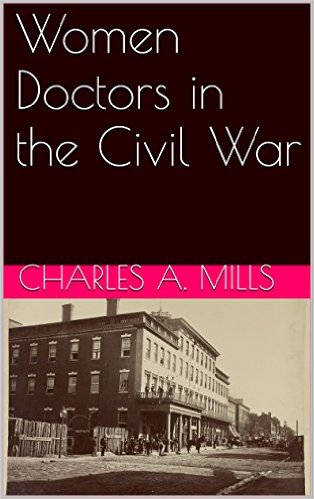
The first woman POW was taken in the Civil War. Union army contract surgeon Dr. Mary E. Walker was captured on April 10, 1864. She was imprisoned in the military prison in Richmond, Virginia known as "Castle Thunder". She was released on August 12, 1864, in a prisoner exchange.

Dr. Walker was awarded the Medal of Honor for her service as a surgeon during the Civil War, “without regard to her own health and safety”. She is the only woman to have received the Medal of Honor. When the criteria for awarding the medal changed in 1917, Dr. Walker’s medal was rescinded along with 900 others. In 1977 the Army Board of Corrections reviewed the case and reversed the 1917 decision, restoring the Medal of Honor to Dr. Walker.


A quick look at women doctors and medicine in the Civil War for the general reader. Technologically, the American Civil War was the first “modern” war, but medically it still had its roots in the Middle Ages. In both the North and the South, thousands of women served as nurses to help wounded and suffering soldiers and civilians. A few women served as doctors, a remarkable feat in an era when sex discrimination prevented women from pursuing medical education, and those few who did were often obstructed by their male colleagues at every turn.