Showing posts with label movies. Show all posts

Tuesday, January 09, 2018

James Bond, Dr. No, and the Duke of Wellington


Portrait of the The Duke of Wellington

In the James Bond movie thriller, Dr. No, when Bond is taken to Dr. No’s palatial lair, he is amazed to see Goya's Portrait of the Duke of Wellington. The painting had been stolen from the National Gallery in London in 1961 just before filming began. Ken Adam, a production designer, contacted the National Gallery in London and obtained a slide of the picture, painting the copy over the course of the weekend, prior to filming commencing on Monday.

So what is the rest of the story? The Portrait of the Duke of Wellington was painted by the Spanish artist Francisco Goya of the British general Arthur Wellesley, 1st Duke of Wellington in 1812 after the general’s triumphant entry into Madrid during the Peninsular War against Napoleon.  The painting remained in aristocratic hands until 1961, when it was auctioned off by the 11th Duke of Leeds.  An American collector, Charles Wrightsman, was about to take possession of the painting when the Wolfson Foundation with the help of a special British Treasury grant, obtained the painting for the National Gallery.

At this point all should have been well, but one Kempton Bunton, a disabled pensioner living on a modest fixed income and bitter with having to pay government imposed television licensing fees, saw red.  The government was handing out grants for la-di-da paintings while he struggled to come up with money to pay for television.  Bunton took direct action.

From conversations with guards at the National Gallery, Bunton learned that the elaborate electronic security system was deactivated in the early morning to allow for cleaning. In the early morning hours of 21 August 1961, Bunton entered the museum through a window he had previously loosened in a toilet. Bunton then made off with the painting undetected and escaped through the window.

The police initially thought the theft was the work of an expert professional art thief.  Subsequently, a letter was received requesting a donation of £140,000 to charity to pay for TV licenses for poorer people and demanding an amnesty for the thief.  The ransom demands were ignored by authorities.

In 1965, four years after the theft, Bunton returned the painting and surrendered to police. A jury convicted Bunton only of the theft of the frame, which had not been returned. Bunton was sentenced to three months in prison.


Tuesday, November 06, 2012

Sid Grauman and the celebrities of Hollywood


No single individual did more to create the Hollywood cult of celebrity than theatrical genius Sid Grauman.  As a youth, Grauman worked in the ramshackle towns of the Alaska Gold Rush as a paperboy.  Newspapers were scarce and expensive, costing up to one dollar each.  Grauman met a store owner who purchased one of his newspapers for $50. The store owner then charged admission to local miners to whom he read the paper aloud in his store. Grauman learned that people would pay handsomely to be entertained.

Grauman built a series of theaters that would define the “movie palace” of Hollywood’s Golden Era.  The Egyptian theater, built in 1922, was the setting for the first-ever Hollywood premiere, Robin Hood, starring Douglas Fairbanks, on Wednesday, October 18, 1922.  The exterior and interior walls of the theater contained Egyptian-style paintings and hieroglyphics. The four massive columns that mark the theatre's main entrance are 4+12 feet wide and rise to a height of  20 feet, the large courtyard in the front, complete with a fountain and palm trees, was specifically designed to host the theater’s famous red carpet ceremonies.


 Grauman built an even more magnificent theater in 1927 further up Hollywood Boulevard, the Chinese Theater. The Chinese Theater was modeled on a Mandarin palace. Not satisfied with the fusion of opulence and stardom, Grauman imbued the Chinese Theater with a mystic aura for millions of movie fans: it was Grauman’s brainchild to invite movie stars to place their hands and feet in the wet cement of the theater’s patio. The dried imprints became like holy relics to movie fans, the imprints also allowed fans to measure their own hands and feet against these relics of their saints.


The hand and feet prints of Marilyn Monroe are said to be the most popular relics.

My titles on Amazon

My titles at Barnes & Noble


The best reading experience on your Android phone or tablet, iPad, iPhone, Mac, Windows 8 PC or tablet, BlackBerry, or Windows Phone.

Sunday, April 08, 2012

King Kong and the true story of Skull Island


The 1933 film King Kong (remade in 1976 and 2005) tells the story of a giant pre-historic creature which rules over a lost island (Skull Island) where it defeats all comers. Ultimately the creature is captured by a group of adventurers and brought back to New York, where it runs amok and is ultimately destroyed by man’s superior technology.


The film had its official world premiere on March 23, 1933 at Grauman’s Chinese Theater in Hollywood. In 1991, the film was deemed "culturally, historically and aesthetically significant" by the Library of Congress and selected for preservation in the National Film Registry.

Was there ever such an island? Was there ever such a monster? In fact, the movie was inspired by a real life monster hunt on an Indonesian island conducted by W. Douglas Burden in 1926.

For years strange tales of a monster living on a remote Indonesian island circulated throughout the East Indies. Official interest was sparked in the early 1910s by stories from Dutch sailors. The creature was allegedly a "dragon" which inhabited a small island in the Lesser Sunda Islands. The fire breathing creature was reported to be seven meters long.

Lieutenant Steyn van Hensbroek, an official of the Dutch Colonial Administration accompanied by a detachment of soldiers landed on the island. After a few days, Hensbroek managed to kill a strange animal. But there were more of the beasts, which were photographed by Peter A. Ouwens, the Director of the Zoological Museum of Java who accompanied the expedition. The expedition provided the first reliable evidence of the existence of what we now call the Komodo dragon.


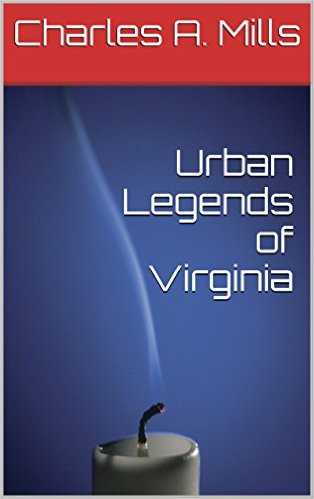
Mind bending stories from the Old Dominion. A collection of Virginia’s most notable Urban Legends, many include the true stories behind them.


Sunday, August 16, 2009

Cinema and Immigration

The movies were an important cultural bridge, mediating the immigrant’s transition into broader American culture. The movies were a collective experience where diverse groups experienced the same public phenomenon. Going to the movies was a common bridging experience between groups. The movies also allowed immigrants (and especially immigrant women who were very limited in their interactions with people outside of the family and “neighborhood”) to broaden their experience outside of the family and immigrant group. The movies helped immigrants organize exposure to new cultural experiences in their own terms in a benign environment. The movies also served as the catalyst for breaking down traditional immigrant norms among the younger generation who were now exposed to a broader range of options.

Cinema and other forms of mass communications helped to define the public and public opinion. In an earlier time this had been the province of the written word, but emerging technologies made “public spaces” (opinions about common ideas) accessible to virtually everyone. To be a public figure was to be someone who was before the public in a mass communications format. The public person (movie star, commentator, politician) because of his public presence came to define the norms, symbols, and values of the society. The consumption of the products of the mass media constructed the mass public.


My titles at Amazon

My titles at Barnes & Noble


The best reading experience on your Android phone or tablet, iPad, iPhone, Mac, Windows 8 PC or tablet, BlackBerry, or Windows Phone.

Monday, August 25, 2008

Immigrants, Movies, and Labor Discipline

The values of nineteenth century America were largely white Anglo-Saxon values that stressed Protestant self-reliance and Victorian respectability. Men worked and subdued the frontier (both literally and figuratively), while the woman’s domain was religion (moral uplift) and the home. Education, self-cultivation and upward mobility were the hallmarks of Anglo Saxon values. The central theme of this value system was Progress (expressed in terms of material progress) versus primitivism.

According to Larry May in his book Screening Out the Past, immigrants presented a disorganizing element into American society because they brought with them other (less restrictive) value systems. In the view of the white Anglo-Saxon majority, immigrants needed to be Americanized in order to, “make no trouble for the right minded” (May, 15). The workplace was one area in which the immigrant must be bent to (industrial) discipline. The other area was leisure. The middle class wanted to control immigrant leisure, and as Roy Rosenzweig points out in Eight Hours for What We Will leisure became a battleground between groups with different value systems.

For immigrants, amusements constituted an important counterweight to the rigors of industrial discipline. Movies were particularly appealing to multi-lingual immigrants. Because movies were silent, they were universally available as an outlet for romance and adventure and formed the ground pattern of social life for the young (May, 38). The movies provided immigrants with a form of acculturation into American life (Mayne,33). Although the middle class frowned on the low themes of the earliest movies, in general movies were much less of a threat to industrial discipline than were other amusements such as drinking in saloons. Immigrants carved out leisure (and especially movies) as a public space apart from work where they could indulge hopes, dreams and aspirations. In embracing the culture of the movies ( and its concomitant consumerism) so enthusiastically, the immigrant movie go-er accelerated the breakdown of old ethnic norms and the development of a more homogeneous society based on mass culture and consumerism. Consumerism offered the image of a homogenous population pursuing the same goals of living well and accumulating goods. The emergence of consumerism served to mask the transformation of the immigrant from person to commodity and tempered resistance to labor discipline (Mayne,34).

The development of the movie industry itself was a tremendous social safety valve. The movie industry, in which immigrants were heavily represented, demonstrated that success could be had without a long laborious submission to the Anglo Saxon value system (May, 196). Success was democratized in the persona of the movie star who by talent and imagination could become an overnight success (May, 233).

In Eight Hours for What We Will, Roy Rosenzweig talks about alternative ethnic worker cultures as opposed to oppositional cultures. Rather than directly challenging the economic elite, the alternative culture passively resists. Initially immigrants found strength to passively resist industrial discipline within the traditions and norms of their ethnic communities, to paraphrase Rosenzweig’s book, “they found a different way to live and wished to be left alone with it” (Rozenzweig, 64). Mass culture appears to have taken the place of the immigrant neighborhood. The modern American citizen passively resists labor discipline by immersing in consumerism and the products of mass culture. Meaning is found in conspicuous consumption.

My titles at Amazon

My titles at Barnes & Noble