Monday, October 31, 2022

The Value of Humor in War and Elsewhere


Humor had its place in even the toughest situations. During the Civil War, a Confederate veteran remembered many years later, “While on that raid we marched and fought for days and nights in succession. Late one dark night we were on the march; it was raining, and we were all wet, cold, tired, sleepy, and hungry. We were bunched up in a creek bottom waiting for those in front to cross the stream. Not a word was being spoken. Old sore-backed horses were trying to rub their riders off against some other horse. We knew we would have fighting to do as soon as day broke, and we had the blues. All at once Joe Leggett said: ‘Boys, I have become reckless; I've got so I don't care for nothing. I had just as soon be at home now as to be here.’ The effect was magical. While the skill and bravery of our generals and the fighting qualities of our soldiers could not have been excelled, if it had not been for those jolly spirits to animate others the war would have come to a close much sooner.”


Tuesday, October 25, 2022

A Soldier Defends a Hopeless Position in the Civil War


A soldier had lost his bayonet and whittled one from wood so he could stand inspection. He was hoping not to be discovered until the regiment had gone into battle where he could pick up one from a dead soldier. At an inspection, an officer asked to see his bayonet. The soldier stated “Sir, I promised my father I would never unsheathe my bayonet unless I intended to kill with it.” The Officer insisted he hand over the bayonet. Taking it out, the soldier looked skyward and declared “May the Lord change this bayonet to wood for breaking my vow.”


Monday, October 24, 2022

Black Soldiers in the American Revolution


During the American Revolution, the British lacked sufficient manpower to put down a revolt by a “people numerous and well-armed”.  This manpower shortage made the use of slaves all the more appealing to the British since slaves constituted some twenty percent of the total population of the colonies.  On June 30, 1779, Sir Henry Clinton the Commander-in-Chief of British forces in North America, promised in the so-called Philipsburg Declaration that "every NEGRO who shall desert the Rebel Standard, [is granted] full security to follow within these Lines, any Occupation which he shall think proper." Now it was not hundreds of slaves seeking refuge in British lines but tens of thousands.  Some one hundred thousand slaves (out of a population of 500,000 slaves) are estimated to have sought freedom with the British over the course of the next four years.  The number might have climbed even higher had slaves not feared brutal retaliation against their families if they fled from their masters.

By freeing the slaves, the British forced slave masters to guard slaves, one of their chief economic assets, instead of fighting British troops. The British were willing to emancipate slaves if by so doing they could first cripple and then crush the rebellion.  Much as in the later American Civil War, military necessity rather than morality acted as the catalyst of history. The use of slaves by the British for military purposes soon prompted the American rebels to begin recruiting blacks.  George Washington gave his approval to Rhode Island's plan to raise an entire regiment of black slaves (the state bought and emancipated slaves willing to become soldiers). Similarly, Massachusetts raised an all-black unit, the Bucks of America under Samuel Middleton, the only black commissioned officer in the Continental Army. In October 1780, even Maryland accepted "any able-bodied slave between 16 and 40 years of age, who voluntarily enters into service . . . with the consent and agreement of his master." New York began recruiting slaves in March 1781.  By June 1781 some 1,500 (25 %) of the 6,000 troops under George Washington’s direct command were black.


Who Were the Slaves of the Founding Fathers?


How Martha Washington Lived: 18th Century Customs

Thursday, October 13, 2022

The Grave of a Hero of the Titanic


One of the notables honored at Arlington National Cemetery is Major Archibald Butt (1865-1912).  Archibald Butt was the military aide to both Presidents Theodore Roosevelt and William Howard Taft.  Butt and his housemate (some say lover), the painter Francis Davis Millet, died during the sinking of the Titanic.  Butt was universally recognized for his heroic conduct during the tragedy. His body was never recovered.  President Taft who had come to regard Major Butt, “as a son or a brother”, praised him as a Christian gentleman and the perfect soldier.  Taft wrote, “I knew that he would certainly remain on the ship's deck until every duty had been performed and every sacrifice made that properly fell on one charged, as he would feel himself charged, with responsibility for the rescue of others.  At a May 5 ceremony, Taft broke down weeping, bringing his eulogy to an abrupt end.


As the Titanic sank, the crew prepared the lifeboats and Major Butt helped in the rescue efforts.  One survivor described him as calm and collected, “Major Butt helped…frightened people so wonderfully, tenderly, and yet with such cool and manly firmness.  He was a soldier to the last.”  A cenotaph was erected in the summer of 1913 by his brothers in Section 3 at a point that Major Butt had previously selected as his gravesite.  The Butt-Millet Memorial Fountain, a private memorial fountain, located in the President’s Park, adjacent to the White House, was dedicated in October 1913.  Powerful friends argued that Butt (who was an aide to the president) and Millet (who was vice chair of the United States Commission of Fine Arts at the time of his death) were both public servants who deserved to be memorialized separately from private citizens who died in the Titanic disaster.


 Legends of the Superstition Mountains


Wednesday, October 12, 2022

The Grave of the First Man to Reach the North Pole ?


 The Grave of Robert E Peary

One of the notables buried at Arlington National Cemetery is Robert E. Peary (1856-1920), an American explorer who claimed to have reached the North Pole on April 6, 1909. Peary's claim was widely credited for most of the 20th century. The first undisputed explorers to reach the North Pole were documented in 1969.  Some historians believe that Peary was guilty of deliberately exaggerating his accomplishments.


Women Doctors in the Civil War


Tuesday, October 11, 2022

The Grave of William Howard Taft


One of the notables buried at Arlington is William Howard Taft (1857 – 1930), the 27th President of the United States and later the tenth Chief Justice of the United States.  Taft is the only person to have served in both offices.  Taft and John F. Kennedy are the only U.S. Presidents buried at Arlington.


Taft is not only one of two presidents buried at Arlington National Cemetery, he is also one of four Chief Justices buried there (the others are Earl Warren, Warren Burger, and William Rehnquist). Taft was the first president to throw out the baseball at a season opener, in a game between the Washington Senators and the Philadelphia Athletics in 1910. Taft's wife, Helen Herron Taft, who died in 1943, was instrumental in bringing Japanese cherry trees to Washington, D.C.  A fourteen foot tall granite monument, inspired by ancient Greek burial steles, marks the graves of Taft and his wife. Mrs. Taft arranged with James Earl Frazer, a New York sculptor, to design this private monument for the grave. The design was approved by the Commission of Fine Arts and the secretary of war. It was erected by the Taft family in early 1932.


How Sherlock Holmes Lived


Haym Salomon: A Jewish Patriot of the American Revolution


Haym Salomon, a Polish-born Jewish businessman immigrated to New York City in 1775 and became a financial broker for merchants dealing in overseas trade.  Salomon joined the Sons of Liberty and was arrested by the British in September 1776 as a spy.  He was detained on a prison ship for eighteen months before being released.  He returned to spying and was arrested again, this time being condemned to death.  After a daring escape, Salomon made his way to the Patriot capital in Philadelphia.

In Philadelphia, because of this financial expertise and language skills, Salomon helped convert French loans into ready cash by selling promissory notes.  He also negotiated large donations from the wealthy, and donated his entire fortune to the patriot cause.

In 1781, George Washington sent for Salomon to raise money for the Yorktown campaign when no money and no credit was available.  Salomon worked his magic and Washington was able to pay the army that won the American Revolution.


How Martha Washington Lived: 18th Century Customs


Sunday, August 28, 2022

19th Century Utopian Societies That Condemned Traditional Marriage


Francis Wright

In the early 19th century, not everyone looked at the institution of marriage with a cheerful eye.  In 1826, Frances Wright's Utopian community in Nashoba, Tennessee, rejected the concept of marriage entirely.  Wright and her followers argued that love and respect, rather than legal ties, should bind couples.  When love and respect disappeared, couples should simply separate. 


                                          The Oneida Community

In New York, the Oneida Community, founded in 1848, described marriage as, "contrary to natural liberty....a cruel and oppressive method of uniting the sexes."  This Community practiced a form of community marriage where each woman was married to every man and each man to every woman.  Most Americans rejected these views and pressured young people to marry.  A man's credit rating, for example, depended in part on whether or not he was married and had children.


Love, Sex, and Marriage in the Civil War


Love, Sex and Marriage in Victorian America

Thursday, August 25, 2022

Mississippi Secedes From the Union


Photo credit: The Library of Congress:  Sergeant A.M. Chandler of Co. F, 44th Mississippi Infantry Regiment, and Silas Chandler, family slave.

On January 9, 1861, the state of Mississippi seceded from the Union giving its reasons in a “Declaration of the Immediate Causes which Induce and Justify the Secession of the State of Mississippi from the Federal Union.”

“In the momentous step which our State has taken of dissolving its connection with the government of which we so long formed a part, it is but just that we should declare the prominent reasons which have induced our course.”

“Our position is thoroughly identified with the institution of slavery-- the greatest material interest of the world. Its labor supplies the product which constitutes by far the largest and most important portions of commerce of the earth. These products are peculiar to the climate verging on the tropical regions, and by an imperious law of nature, none but the black race can bear exposure to the tropical sun. These products have become necessities of the world, and a blow at slavery is a blow at commerce and civilization. That blow has been long aimed at the institution and was at the point of reaching its consummation. There was no choice left us but submission to the mandates of abolition, or a dissolution of the Union, whose principles had been subverted to work out our ruin.”

“That we do not overstate the dangers to our institution, a reference to a few facts will sufficiently prove.”

“The hostility to this institution commenced before the adoption of the Constitution, and was manifested in the well-known Ordinance of 1787, in regard to the Northwestern Territory.”

“The feeling increased, until, in 1819-20, it deprived the South of more than half the vast territory acquired from France.”

“The same hostility dismembered Texas and seized upon all the territory acquired from Mexico.”

“It has grown until it denies the right of property in slaves, and refuses protection to that right on the high seas, in the Territories, and wherever the government of the United States had jurisdiction.”

“It refuses the admission of new slave States into the Union and seeks to extinguish it by confining it within its present limits, denying the power of expansion.”

“It tramples the original equality of the South under foot.”

“It has nullified the Fugitive Slave Law in almost every free State in the Union and has utterly broken the compact which our fathers pledged their faith to maintain.”

“It advocates negro equality, socially and politically, and promotes insurrection and incendiarism in our midst.”

“It has enlisted its press, its pulpit and its schools against us, until the whole popular mind of the North is excited and inflamed with prejudice.”

“It has made combinations and formed associations to carry out its schemes of emancipation in the States and wherever else slavery exists.”

“It seeks not to elevate or to support the slave, but to destroy his present condition without providing a better.”

“It has invaded a State and invested with the honors of martyrdom the wretch whose purpose was to apply flames to our dwellings, and the weapons of destruction to our lives.”

“It has broken every compact into which it has entered for our security.”

“It has given indubitable evidence of its design to ruin our agriculture, to prostrate our industrial pursuits and to destroy our social system.”

“It knows no relenting or hesitation in its purposes; it stops not in its march of aggression and leaves us no room to hope for cessation or for pause.”

“It has recently obtained control of the Government, by the prosecution of its unhallowed schemes, and destroyed the last expectation of living together in friendship and brotherhood.”

“Utter subjugation awaits us in the Union, if we should consent longer to remain in it. It is not a matter of choice, but of necessity. We must either submit to degradation, and to the loss of property worth four billions of money, or we must secede from the Union framed by our fathers, to secure this as well as every other species of property. For far less cause than this, our fathers separated from the Crown of England.”

“Our decision is made. We follow their footsteps. We embrace the alternative of separation; and for the reasons here stated, we resolve to maintain our rights with the full consciousness of the justice of our course, and the undoubting belief of our ability to maintain it.”

Mississippi was the second state to secede from the Union, following South Carolina which had seceded on December 20, 1860.


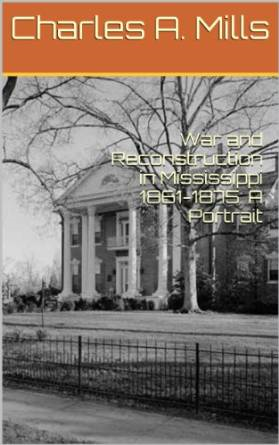
War and Reconstruction in Mississippi 1861-1875: A Portrait


The Great Northern Rebellion of 1860 (alternate history)


Friday, August 19, 2022

Van Dorn's Raid on Holly Springs, Ms.

 The state of Mississippi was to see a great deal of hard fighting during the war. Major engagements were fought at Corinth (1862), Port Gibson (1863), Jackson (1863), and Vicksburg (1863). Obeying General Sherman’s orders to, “destroy everything public not needed by us,” Federal troops took the occupied parts of the state literally apart, looting stores and houses, and setting fire to warehouses, factories and foundries.

 The first raid made by Federal soldiers on Holly Springs occurred in early 1862. The raiding party ransacked the home of William Manson. Furniture was smashed to pieces, music was pounded out on the piano with the ends of muskets, and rich cushions and carpets were shredded. The soldiers poked holes in family paintings with their bayonets.

 In late November, the Union army moved south from Tennessee. General Ulysses S. Grant had set in motion a plan for the speedy conquest of Vicksburg. His line of march was parallel to the Mississippi River and some sixty miles east. He planned to sweep through northern Mississippi, carefully extending and maintaining his lines of supply as he progressed, until he reached Jackson. There he would cut the railroad line between that city and Vicksburg, at which point he expected to take Vicksburg with relative ease. On November 27, 1862 an advance guard entered Holly Springs and took over the largest and most comfortable houses. The Coxe Place on Salem Avenue was, taken over for the General Army Headquarters while the private residence of General Grant, accompanied by his wife Julia, was established at the Walter Place on Chulahoma Avenue. For two weeks a Federal army of 75,000 men rested in Holly Springs, before moving south toward Vicksburg.


A Holly Springs Home

Elements of the 8th Wisconsin infantry and a portion of the2nd Illinois Cavalry, some 1,500 men under the command of Colonel Robert Murphy, remained in Holly Springs to guard the newly established supply base.

 On Saturday, December 20, 1862, Confederate Major General Earl Van Dorn raided the town. In the pale light of dawn, Van Dorn‘s men stormed into Holly Springs, surprising the Federals who emerged half asleep from their tents, firing as they came.  The Confederate 2nd Missouri dismounted and charged on foot, dispersing any infantry they encountered. The Texas brigade charged from the east, coming in from the railroad depot. Most of the Federal garrison surrendered after a token resistance. Only the 2nd Illinois Cavalry chose to fight. With sabers drawn and flashing, some three hundred and fifty horsemen charged through the attacking Confederates, suffering one hundred casualties.


Major General Earl Van Dorn

 A long train of boxcars loaded with rations and clothing was captured. The railroad depot, the Court House and many houses were filled with supplies of all kinds. The public square contained hundreds of bales of cotton. A large brick livery stable and the adjacent Masonic temple were packed with unopened cases of carbines and Colt six— shooters. From 7 A.M. to 4 P.M. Union army stores were first plundered and then burned. Van Dorn’s raid destroyed huge quantities of supplies, leaving the Union army in enemy territory without supplies. Grant was forced to return to Memphis.


Civil War Humor 1861-1865


The 1865 Fall of Richmond in Pictures

Wednesday, August 17, 2022

Divorce in the American Civil War

 Authority over the family was legally vested in men, which profoundly influenced a woman's ability to control property, dissolve her marriage or insure custody of her children (there were fewer than 10,000 divorces a year in 1861).  A woman's right to own property emerged slowly.  Mississippi passed the first Married Women's Property Act in 1839.  In 1845 Massachusetts passed similar legislation, with New York following suit in 1848.  In 1855, Massachusetts far in advance of the rest of the Union, legislated to protect the wages of working married women, which were at that time, the legal property of her husband.


Laws concerning divorce varied widely among the states throughout much of American history. In New England, where the Puritans had defined marriage as a civil contract rather than a religious sacrament, secular law had provided for divorce as early as the 17th century. Like any other contract, the marriage bond could be broken when either of the contracting parties failed to meet the obligations it imposed. Adultery, impotence, desertion, or conviction for serious crimes, were all grounds for divorce. Additionally, wives could obtain a divorce on the grounds of non-support.


In most states in the early 19th century, an act of the legislature was required to end a marriage. As the century progressed divorce laws became more liberal. During the 1850s, Indiana was widely condemned for its liberal ways. A couple in Indiana could obtain a divorce on any grounds that a judge ruled “proper”. Indiana judges were far more permissive than the New York City judge who in 1861 refused to grant a divorce to a wife whose husband had beaten her unconscious in an argument over letting the family dog sleep on the bed. The judge advised the woman that “one or two acts of cruel treatment” were not proper grounds for divorce. Indiana’s liberal stance on divorce attracted a flood of applicants from other states. The influential newspaper editor and future presidential nominee, Horace Greeley denounced Indiana as “the paradise of free-lovers” whose example would soon lead to “a general profligacy and corruption such as this country has never known.”

 Among the enslaved population, divorce, like marriage, was within the master's jurisdiction.  Rules were as severe or lax as the master wished.


Wednesday, August 10, 2022

Civil War Bordellos


With the outbreak of war, many prostitutes, known as "Cyprians", "Fallen Angels", "Daughters of Eve" and "Daughters of Joy" followed the drum, attaching themselves to the armies as cooks and laundresses.  The mob of camp followers attached to the Army of the Potomac in 1862 was dubbed "Hooker's Army", in honor of the Commanding General Joseph Hooker.  The term "hooker" has come down to modern times as a description of a woman of easy virtue.


Washington saw an explosion of active and prosperous bawdy houses.  Before the outbreak of war Washington had some five hundred prostitutes.  As Washington became the bustling hub of the Union army in the East, ambitious girls from New York, Philadelphia, Baltimore, Chicago and St. Louis converged on Washington.  There were 450 known houses in Washington in 1862, employing 5,000 women, with an additional 2,500 women employed in nearby Georgetown and Alexandria.  Bordellos occupied whole blocks along the south side of Pennsylvania Avenue.  The Army christened these establishments, the "Post Office", "Fort Sumter", the "Wolf's Den" (run by Mrs. Wolf), "the Haystack" (run by Mrs. Hay) and the "Cottage by the Sea".  In the expensive houses, there were luxurious furnishings and pretty young hostesses dressed in silk.


These establishments were not popular with the neighbors.  Tired of loud late-night parties and the general atmosphere of carousing, residents of one neighborhood threatened to make up a list of officers who frequented "notorious places of infamy", and report them to the commanding general, and to their families at home.  The press also took a hand in censuring the sinful atmosphere, condemning the "uniformed idlers who go gallanting the painted Jezebels with which the city is stocked."  


The Provost Marshal made some effort to suppress the trade.  Brothels were raided by the Provost Marshal and, after a fine, declared "broken up".  For a girl, the fine was five dollars or three months in the house of corrections.  For a Madam, the fine was $50 or six months in the house of corrections.  As a practical matter the fines were paid, no one spent any time in the house of corrections and the "sporting house" merely set up shop at a new location.  The Provost Marshal did have some successes, however.  The employment of "pretty waiter girls" in beer and concert saloons was prohibited and these well-known places of assignation were quickly cleaned up.  Although the Provost Marshal's efforts were treated as a joke by many, there was a sound military reason for cracking down on "the trade".  Union military records reveal that 82 out of every 1,000 men (some 8 % of the Army) suffered from some sort of debilitating venereal disease.


Love, Sex, and Marriage in the Civil War


Tuesday, August 09, 2022

Lincoln's Wedding


      In the fall of 1839, twenty-year-old Mary Todd moved from Lexington, Kentucky, to Springfield, Illinois.  Shortly after her arrival, she met thirty-year- old Abraham Lincoln at a cotillion.  Lincoln came up and said to her, “Miss Todd, I want to dance with you in the worst way.” The next evening, Lincoln called on her again and began his courtship.  Over the next few years Mary became engaged to Lincoln, broke up with him, entered a period of separation and misunderstanding, and finally began seeing him again.

     On the morning of Thursday, November 3, 1842, Lincoln dropped by the home of Reverend Charles Dresser. The Dresser family was still at breakfast when Lincoln announced, “I want to get hitched tonight.” Reverend Dresser agreed to the arrangement.

     After leaving the Dresser home, Lincoln happened to meet Ninian Edwards in the street. He told Mr. Edwards of the plans for the marriage. Mr. Edwards replied, “No, I am Mary's guardian and if she is married at all it must be from my house.” When Elizabeth Edwards was informed of the plans, it was decided that the marriage would be delayed by one day as the Episcopal sewing society was meeting at the Edwards' home that night and dinner had already been ordered. 

     Sometime before the wedding, Lincoln visited Chatterton's jewelry shop in Springfield. He ordered a gold wedding ring and had it inscribed,  “Love is Eternal” .

     Abraham Lincoln and Mary Todd were married at the Edwards' home on Friday evening, November 4, 1842. Some thirty relatives and friends attended the ceremony. Mary wore a white muslin dress. She wore neither a veil nor flowers in her hair. A week after the marriage, on November 11, 1842, Abraham wrote a letter to a friend. Most of the letter dealt with legal matters, but he closed the letter with the following sentence: “Nothing new here, except my marrying, which to me, is a matter of profound wonder.”


                                   The Civil War Wedding (e-book)


The Civil War Wedding Soft Cover


Love, Sex, and Marriage in the Civil War

Friday, July 15, 2022

Captain Weir: Custer’s Would be Rescuer

 Thomas Benton Weir first served under General George Armstrong Custer during the American Civil War, enlisting in the Michigan Cavalry. He quickly earned promotion to first sergeant and later received brevet promotions to majorlieutenant colonel, and colonel in recognition of his superior performance during the war.

 In May 1866, Custer was lieutenant colonel of the new 7th U.S. Cavalry stationed at Fort Riley, Kansas, where the regiment was to be organized and trained.  Joining Custer and his wife Libbie were a diverse group of officers, including Captain Thomas Weir, the charming but hard-drinking Michigan officer who had served with Custer before.


Captain Weir

The 7th Cavalry was ordered west in March 1867 to overawe the Cheyennes and Sioux.  Custer fruitlessly pursued an elusive foe. By summer he was surly and morose and on July 15 decided to abandon his command and lead a small detachment on a dangerous forced march to Fort Harker, Kansas where he expected to find Libbie.  He discovered that she was still at Fort Riley.

Custer had received an anonymous letter urging that Custer should “look after his wife a little closer.” Lieutenant Edward Mathey later confirmed that Thomas Weir was “the reason why Custer left his command without permission.” Weir had indeed been very attentive to Libbie during Custer’s long absence, rescuing her from a flood, escorting her on long evening strolls and proving himself utterly charming. A serious flirtation seemed to be in progress. Confirmation for this comes from Custer himself when he later wrote to Libbie, “The more I see of him…the more I am surprised that a woman of your perceptive faculties and moral training could have entertained the opinion of him you have.”


Libbie Custer

Custer boarded a train for Fort Riley and surprised Libbie that summer of 1867 with what Libbie described as one long, perfect day, which would always be hers for time and eternity.  The romantic gesture resulted in a court-martial and a humiliating suspension from rank and pay for Custer, who only recouped his name by leading the 7th Cavalry to victory at the Battle of the Washita.

On June 25, 1876, during the Battle of the Little Bighorn, Custer ordered Captain Frederick Benteen to “come quick, bring packs (that is the spare ammunition that was lagging behind).   Benteen, came upon Reno’s beleaguered force and halted. 

At this point, Captain Thomas Weir, considered a part of the Custer clique, disobeyed Benteen’s orders to remain with Reno’s command, and rode to the sounds of battle in an attempt to support Custer.  He made it as far as what is now known as Weir Point, about three miles south of Last Stand Hill and about one and a half miles north of Reno Hill. Here, Weir was later joined by Benteen and Reno. 

The would-be rescuers were set upon by a large party of Sioux warriors and made a fighting retreat back to Reno’s original entrenched position, where they were besieged for a day and a half before being relieved by General Terry.  

After the Battle of the Little Bighorn, Weir’s mental health declined rapidly. Assigned to recruiting duty in New York City, Weir wrote letters to Libbie Custer hinting at untold secrets regarding her husband's death.  He repeatedly wrote promising to come to her side in Monroe, Michigan.  He never made it. 

Thomas Weir died on December 9, 1876. In the final months of his life, he refused to go outside, began to drink heavily and in his last days was said to be extremely nervous, to the point of being unable to swallow.  Doctors informed Libbie Custer that the 38 -year- old captain, in the advanced stages of alcoholism, had died of “melancholia.”


Wednesday, June 29, 2022

UFOs over Phoenix (1997)

 Ancient peoples around the world have reported unidentified lights in the sky for thousands of years.  The ancients believed that the gods themselves came down and visited them on a regular basis.  Native Americans in Arizona were no different.  These interactions were memorialized in petroglyphs and through oral traditions preserved as myths and legends. It is only when humans achieved high altitude flight that visits from the gods became visits by Unidentified Flying Objects (UFOs).

On March 13, 1997, Arizona experienced one of the largest mass UFO sightings in history, the so-called Phoenix Lights. Lights of varying descriptions were seen by thousands of people during a three-hour period, over a distance of three hundred miles stretching, from the Nevada line, through Phoenix, to the edge of Tucson. There were two distinct events involved in the incident: a triangular formation of lights seen to pass over the state, and a series of stationary lights seen in the Phoenix area. The United States Air Force identified the second group of lights as flares dropped by military aircraft.  The initial sightings remain unexplained.

The first call came from a retired police officer in Paulden, Arizona, a small town about two hours north of Phoenix at approximately 7pm.  After that, calls began pouring into television stations and the police.  The reports were unanimous on several key points: there was a triangular craft that was enormous (some witnesses described it as a mile wide), it was totally silent, it moved slowly, and it often stopped to hover.

A drawing of the object created by witness Tim Ley appeared in USA Today

The Governor’s office was besieged with calls, especially after a USA Today article in June brought international attention to the incident.  To stem a mounting sense of panic in the state, Governor Fife Symington held a press conference during which he claimed to have “found who was responsible” for the lights.  Symington then brought in his chief of staff dressed in an alien costume, handcuffed and looking contrite.  Crisis averted.  Ten years later, however, Symington confessed before the National Press Club, that he had pulled this stunt only to avert public panic.  He said that he himself had seen the object and that it was, “enormous and inexplicable.”

The Great UFO Secret (Six Short Stories of First Contact)


Legends of the Superstition Mountains

Amazon:                           All other: